
How to Reduce Energy Loss at Your Loading Dock This Winter
Heating a warehouse through a Quebec winter is expensive enough without paying to heat the yard too. That is exactly what happens at most docks. Every time a door opens, warm air escapes over the top of the trailer and cold air rolls in along the floor. Repeat that dozens of times a day and the dock becomes one of the biggest energy drains in the building.
Better loading dock energy efficiency rarely requires a major project. Most of the improvement comes from closing gaps, matching equipment to your trailers, and keeping doors shut longer.
Find Where the Heat Is Going
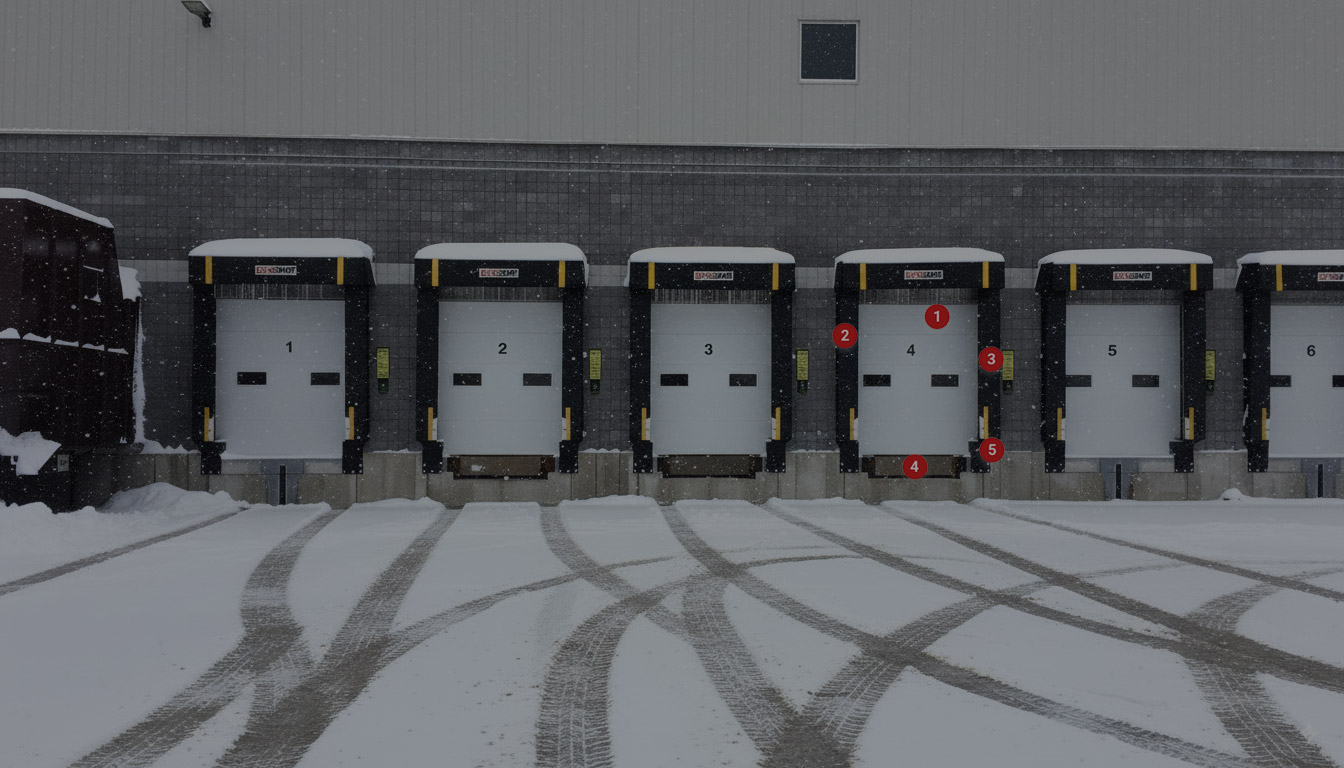
Before buying anything, find out where the losses are. On a cold day, stand inside with a trailer docked and the door open. Cold air at the loading dock usually comes in at three spots: above the trailer roof, along the sides near the trailer door hinges, and under or around the leveler. You can often feel it with your hand. An infrared thermometer or thermal camera makes it easier to compare positions, so note what you find by door number.
Dock Seals or Dock Shelters?
Dock seals are foam pads that compress against the back and sides of the trailer. Sized correctly, they give the tightest closure you can get, which is why cold storage and food plants rely on them. They work best when trailers are a consistent size and drivers back in straight.
Dock shelters use a rigid frame with fabric curtains that wrap the trailer sides and drop across the roof. They leave the full trailer opening clear, so forklifts have the full width to work with, and they handle a wider range of trailer sizes. The closure is not as tight as foam, but a well-fitted shelter still stops most of the airflow.
If you receive a mix of carriers and trailer heights, a shelter is usually the better choice. If the same fleet backs in every day, seals are hard to beat. Browsing the range of dock seals and shelters gives you a sense of the options for different door sizes and traffic levels.
Fit Matters as Much as the Product
A seal or shelter that does not match your trailers will leak no matter how new it is. Head pads mounted too high leave a gap over shorter trailers. Side pads that stick out too far get torn and pushed out of position. Shelter curtains that are too short never touch the trailer at all. If your carrier mix has changed in the last few years, check whether the dock still fits it.
Cut the Time Doors Stay Open
The cheapest fix is a closed door. A dock door left open with no trailer at the position wastes more heat than any worn pad. Train staff to close doors between loads, and where traffic allows it, ask about timer-to-close settings on operators equipped with the right safety devices.
High-speed doors help in two places. Between the dock and the heated warehouse, they add a second barrier that opens only when a forklift passes. At exterior positions, pairing one with the main overhead door cuts exposure from minutes to seconds. Many models reset themselves after a forklift strike, which matters on a busy dock.
Seal the Door and Leveler Perimeter
Flattened bottom seals, torn jamb seals, and missing header seals let cold air in even with the door down. Replace any that have cracked or gone stiff. Around pit levelers, brush or rubber weather seals along the sides and back of the pit close a leak many facilities overlook. It is one of the cheapest steps toward an energy-efficient loading dock. Vertical storing levelers avoid that gap altogether, since the overhead door closes right down onto the dock floor.
Keep It Working Through the Season
Pads compress, curtains tear, and door adjustment drifts after months of heavy use. A preventative maintenance program keeps seals, doors, and operators in shape with scheduled visits, so wear gets caught before it shows up on the heating bill.
Where to Start
If you are not sure which positions are costing you the most, book a dock and commercial door safety inspection and have a technician look at your doors, seals, and levelers together. For questions about seal replacement, high-speed doors, or weather seal upgrades, contact the Door Doctor team.