
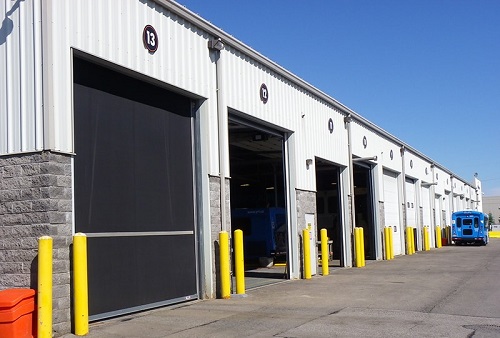
Warehouse Door Repair: 7 Signs You Should Fix the Door Before It Stops Your Shift
A warehouse door usually warns you before it quits
Most warehouse doors do not fail out of nowhere. They give you a few hints first. The trouble is, those hints are easy to ignore when the dock is busy and the door still sort of works. Then one cold morning or one heavy traffic day pushes it over the edge, and now a lane is backed up, drivers are waiting, and someone is asking why the door was not dealt with sooner.
If you manage a warehouse, service bay, or shipping area, it helps to know what “normal wear” looks like and what points to a repair call that should not wait.
1. The door sounds worse than it used to
You know the difference between a door that works hard and a door that sounds wrong. Grinding, popping, dragging, or a loud shudder on the way up usually means something is wearing unevenly. It might be rollers, hinges, bearings, or track alignment. None of those problems improve on their own. They usually get louder, then slower, then more expensive.
A noisy door is often the first sign that you still have time to fix it before it turns into a stopped shift.
2. It opens or closes unevenly
A warehouse door should move cleanly. If one side seems to lag, if the bottom edge does not meet the floor evenly, or if the curtain drifts in the guides, treat that as a repair issue, not a quirk. Uneven travel can point to spring problems, worn cables, track damage, or impact that knocked the system out of line.
This is the kind of thing people work around for weeks. Then one day the door hangs up halfway and the work-around is gone.
3. Drivers or staff have started “helping” the door
The moment people start nudging a door, pulling it down by hand, hitting the button twice, or warning new staff that “Bay 4 sticks a little,” you are past the stage of routine annoyance. A door should not need a technique. It should open, close, and seal without a trick.
That is usually the point where it makes sense to bring in a team that handles commercial door repair service for warehouse and overhead doors. Door Doctor’s service page notes same-day commercial service, preventive inspection, and repair support for warehouse and service bay overhead doors, along with commercial operators and docking equipment.
4. The seal at the bottom or sides is shot
This one gets ignored all the time because the door still “works.” But once the bottom seal is torn up or the perimeter seals stop making contact, the opening starts costing you money. In winter, you feel it as cold air and floor condensation. In summer, it shows up as dust, heat, and humidity where you do not want it.
It is not just an energy issue either. A bad seal can make the floor line slick and create the kind of small safety problem people only notice after someone slips.
5. The door has been hit more than once
One forklift bump does not always mean replacement. Repeated hits are different. Tracks loosen. Sections bow. Fasteners start to pull. The door may still cycle, but it is no longer moving the way it was designed to. Once that starts happening, repair becomes less about one part and more about whether the opening is still structurally sound.
If the traffic is heavy enough that impacts are becoming part of daily life, it may be worth looking at high-speed industrial doors built for heavy-duty warehouse traffic. Door Doctor’s high-speed door page highlights models designed for high-impact environments, frequent cycling, and energy-efficient operation across warehousing, manufacturing, cold storage, and similar industrial uses.
6. The controls are becoming unreliable
Sometimes the door itself is not the main problem. The trouble is in the sensors, limits, operator settings, or control logic. If the door reverses for no clear reason, stops short, hesitates before closing, or behaves differently depending on the weather, the controls need attention.
These issues are easy to shrug off until they start interrupting traffic flow. At that point, a relatively small repair can save you from a much bigger service call later.
7. You are calling for the same problem again
This is the clearest sign of all. If the same door is eating parts, drifting out of adjustment, or needing repeat visits every few weeks, stop treating it like bad luck. That is usually a sign that the root problem was never solved, or that the door is working in conditions it was not really built for.
A good repair visit should answer a bigger question: is this door worth fixing again, or is it time to move toward a different setup?
Catch it before it becomes downtime
Warehouse door repair is cheaper when you do it before the door fully gives up. That sounds obvious, but it is exactly what gets missed in busy operations. Small issues get pushed until they become shift problems.
If your door is noisier, slower, harder to seal, or getting harder for staff to trust, take that seriously. Most doors tell you they need help before they fail. The smart move is listening while you still have options.