
Rolling Steel vs. Sectional Overhead Doors: Which Commercial Door Is Right for Your Building?
Rolling steel doors are the better choice when you have limited headroom, need strong security, or run an opening that cycles dozens of times a day. Sectional overhead doors come out ahead when insulation, temperature control, and a lower upfront price matter more to you. The decision really comes down to three things: how much ceiling space you have, how often the door opens, and what you keep inside.
How the Two Doors Actually Work
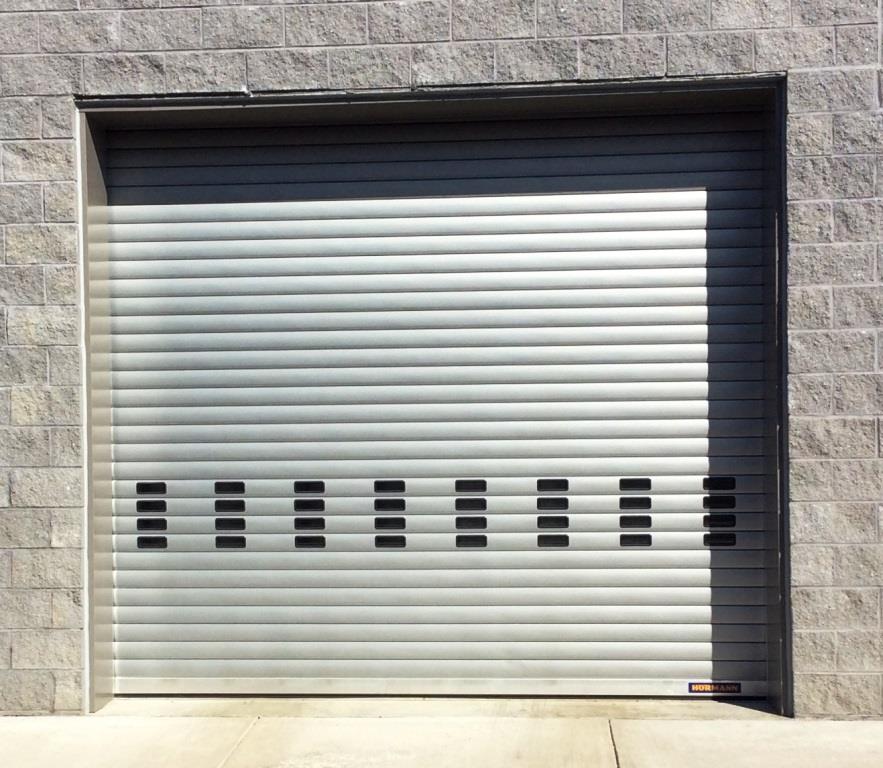
The two doors solve the same problem in completely different ways. Rolling steel doors are built from narrow interlocking steel slats that wind into a compact coil above the opening. Since they roll straight up instead of folding back across the ceiling, they take up almost no overhead room and keep your interior clear for lighting, ductwork, or racking. If you want to see the slat profiles and gauges available, take a look at our industrial rolling steel doors and the options built for heavy daily use.
Sectional overhead doors work the opposite way. They use large horizontal panels joined by hinges, and the door travels up and then back along tracks mounted to the ceiling. That design needs clear headroom to function, but it also lets the panels carry thick insulation, windows, and even a built-in pedestrian door.
When Rolling Steel Doors Make Sense
Reach for rolling steel when your building has little clearance above the opening, when security is a top concern, or when the door gets used constantly. The interlocking curtain and structural steel guides stand up to impact and forced entry far better than panels do, and the simple mechanism means fewer parts wear out. Warehouses, manufacturing plants, storage facilities, and any high-cycle bay tend to do well with this style.
When Sectional Overhead Doors Make Sense
Sectional doors are the practical pick when you heat or cool the space behind the door. Insulated panels hold temperature, which lowers energy costs through a Quebec winter and keeps cold-chain areas stable. They also cost less to buy and install, and when something fails you can often swap a single panel instead of the whole assembly. Loading bays, retail backrooms, and service garages with decent ceiling height are common homes for them.
The Trade-Offs at a Glance
- Headroom needed: Rolling steel needs very little; sectional needs clear ceiling space.
- Upfront cost: Sectional is usually cheaper to buy and install; rolling steel costs more.
- Insulation: Sectional panels insulate well; rolling steel is weaker on temperature control.
- Security and impact: Rolling steel is the stronger barrier; sectional is more vulnerable to dents.
- Repairs: Sectional panels can be fixed individually; rolling steel has fewer parts to fail.
- Lifespan in high-cycle use: Rolling steel typically lasts longer; sectional wears faster under constant cycling.
Getting the Right Door for Your Building
There is no single winner here, only the door that fits how your space actually runs. Measure your headroom first, then count how many times the door opens on a busy day, then decide whether insulation is a real factor. If you are still weighing it, look at the range of commercial and industrial projects we have completed to see how similar buildings made the call. A quick site visit usually settles the question faster than any spec sheet.
FAQ
Which is cheaper, rolling steel or sectional doors? Sectional doors generally have a lower purchase and installation price. Rolling steel costs more upfront but can be the better long-term value in high-traffic openings.
Do rolling steel doors need less headroom than sectional doors? Yes. Rolling steel coils into a small barrel above the opening, so it needs far less clearance than a sectional door that tracks back along the ceiling.
Are sectional doors better for cold weather? For heated or temperature-controlled spaces, usually yes, because insulated panels hold heat better than a steel curtain.
How long do rolling steel doors last? With routine service they often last the life of the building, especially in heavy-use settings where simpler mechanisms hold up well.
Can you insulate a rolling steel door? Some models offer insulated slats, though they still do not match the thermal performance of a well-built insulated sectional door.